VAQUERO — EL OFICIO
DE ESTA TIERRA



LOS PRIMEROS CABALLOS
The horses came ashore at Loreto in 1697, off Jesuit supply ships, with the cattle they would be asked to move. The men who learned to work them had open country, a long dry season, and whatever they could carry.
What they built became the vaquero: a rider who could handle cattle alone, across distance, on a horse he had trained himself. The method travelled north with the missions into Alta California, and then east across the continent.
The American cowboy speaks Spanish without knowing it. Buckaroo is vaquero. Lariat is la reata. Chaps are chaparreras, mustang is mesteño, ranch is rancho. The whole vocabulary came off those ships with the horses.
LA JÁQUIMA
The jáquima is a braided rawhide noseband — the English word hackamore wore down from it — and it is where a vaquero horse begins. It works on weight and feel, carried through the rider’s hands.
From there the horse moves to two reins, and eventually to the bridle. Done properly, the progression takes five to seven years. A finished bridle horse answers to a rein weighing almost nothing, and the men who make them measure their careers in how many they have brought through.
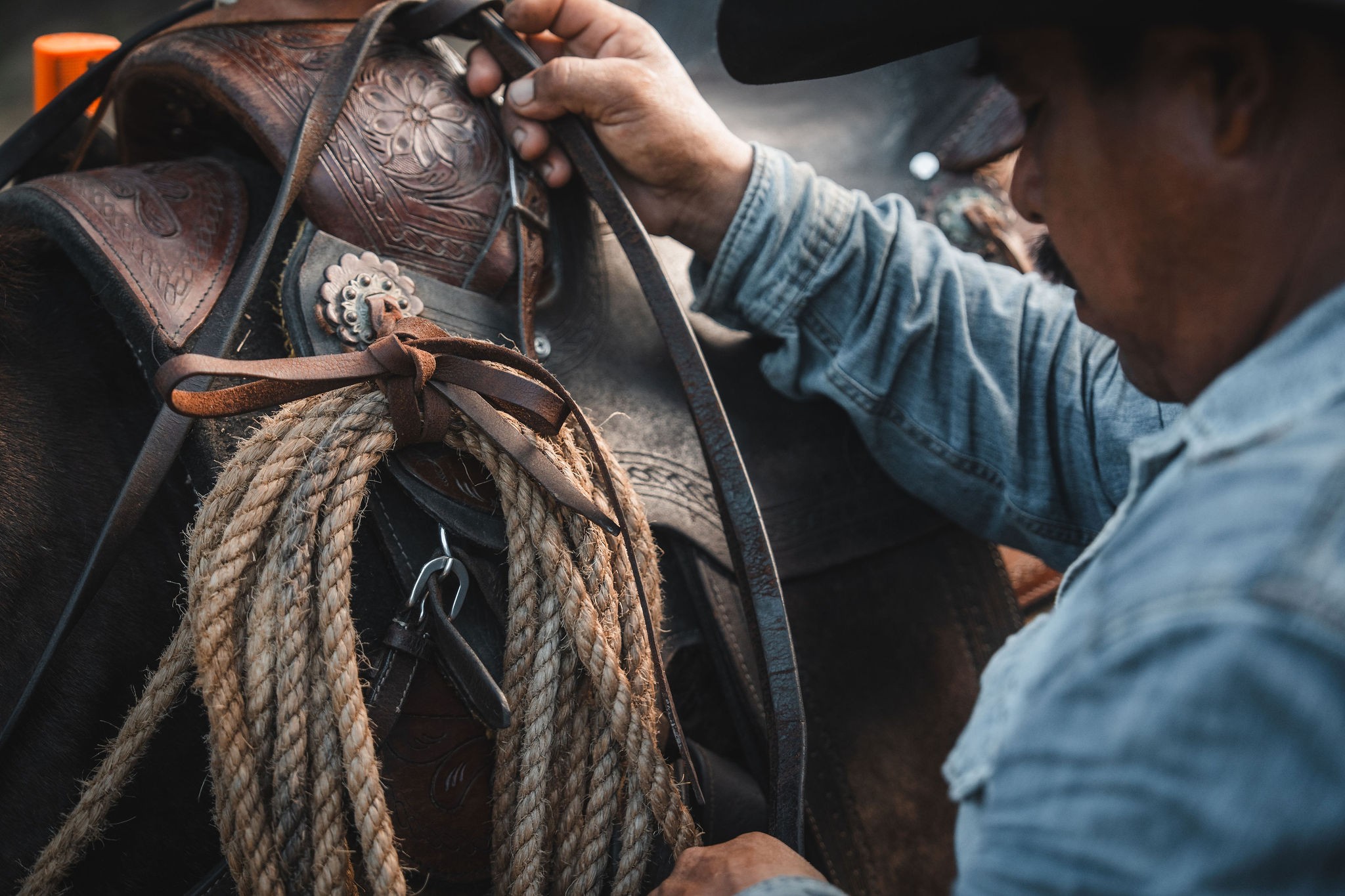
The reata is the same discipline in rope: sixty feet of braided rawhide, thrown and then turned around the saddle horn — dar la vuelta, which English kept as dally. Both tools are built for patience, and they pay it back.
LO QUE GUARDAMOS
Suelo Sur is laid out the way a vaquero packs — shade first, fire at the centre, room to move, everything carried earning its weight. The property was planned around a tree rather than a floor plan, which is the same instinct.
The horses on this land are worked and cared for by people who learned it here. Saddles and rope come from makers on this peninsula. The fire in the kitchen is the method the ranches have always used, run by a chef who learned it as technique.
The craft is a working one, so we keep it working. That is the only form of respect it has ever asked for.
